If you’ve searched for eco-friendly laundry sheets, you’ve probably landed on dozens of “best of” lists – but not many answers to the question that actually matters: are laundry sheets genuinely better for the planet than the liquid detergent you’ve used your whole life, or is it just clever packaging?
We ran both side by side over several wash cycles – whites, colours, everyday loads, and stubborn stains – while also digging into the manufacturing, packaging and transport side of things. Here’s what the difference actually looks like in practice, not just in marketing copy.
Quick answer: Eco friendly laundry sheets are a genuine upgrade over liquid detergent for most households – lighter, more compact, plastic-free, and effective across everyday washing, from whites to colours to activewear. They cut packaging waste, reduce transport emissions, and take the guesswork out of dosing. For the vast majority of laundry loads, sheets clean just as well as liquid detergent, with the added benefit of a much smaller environmental footprint.
Laundry sheets are thin, dissolvable strips made from a concentrated blend of surfactants, enzymes and (in eco-friendly formulations) plant-derived cleaning agents, pressed into a solid sheet using a water-soluble polymer. Drop one into the drum or drawer, and it dissolves fully during the wash cycle, releasing the detergent.
The appeal is simple: no plastic bottle, no heavy water content to ship, and no measuring cup guesswork. A single box of sheets typically weighs a fraction of the equivalent number of liquid detergent bottles, which matters more than most people realise once you factor in transport.
Laundry Sheets vs Liquid Detergent: Side-by-Side Comparison
| Factor | Laundry Sheets | Liquid Detergent |
|---|---|---|
| Packaging | Cardboard box, often plastic-free | Plastic bottle (recyclable, but rarely fully recycled) |
| Weight & shipping footprint | ~90% lighter than liquid, since there’s no water content | Heavy – up to 80-90% of liquid detergent is water |
| Storage space | Flat pack, fits through a letterbox | Bulky bottle, takes up cupboard space |
| Dosing | Pre-measured per sheet, less waste | Easy to overpour, leading to excess chemical runoff |
| Performance on tough stains | Good for everyday stains; may need pre-treatment for set-in or oil-based stains | Generally stronger on heavily soiled loads |
| Cold wash performance | Formulated to dissolve at 20–30°C in most cases | Performs consistently across temperatures |
| Cost per wash | Roughly comparable, sometimes slightly cheaper in bulk packs | Varies widely by brand |
| Biodegradability | Typically free from phosphates, added fragrance and harsh surfactants | Varies – many mainstream brands still use synthetic surfactants |
The packaging and shipping weight difference is where eco friendly laundry sheets pull ahead most clearly. Liquid detergent is mostly water, so you’re paying – in both money and carbon emissions – to transport something you could add from your own tap.
This is the most-asked question about laundry sheets, and the good news is: yes, for the vast majority of washing, they hold their own brilliantly.
For everyday washing – sweat, light food stains, general grime – sheets performed just as well as liquid detergent in our testing, on both 30°C and 40°C cycles. Clothes came out clean and fresh, and fragrance-free formulations left no residual scent, which is a real plus for anyone with sensitivity to synthetic fragrance.
Even on larger loads (bedding, towels, a full week’s washing) and tougher stains, sheets performed well once paired with a quick pre-treat on the specific stain – the same habit that gets the best results from any detergent, liquid included. It’s a small extra step that makes sheets just as capable as anything else in your laundry routine.
Practical tip: for a standard 4–6kg load, one sheet is all you need. For larger or heavily soiled loads, simply use two – sheets scale up just as easily as liquid.
Beyond performance, the environmental case for sheets is fairly strong when you break down what actually contributes to a detergent’s footprint:
That last point matters. Not every laundry sheet on the market is equally eco-friendly – greenwashing is common in this category, so ingredient transparency and where a product is manufactured are worth checking before buying. Brands like Tiboo, for example, publish our ingredient breakdowns and manufacturing details openly, which is the kind of transparency worth looking for regardless of which brand you choose – it’s a reasonable benchmark for what a genuinely eco-conscious laundry sheet should disclose.
Laundry sheets are easy to get great results from once you know a couple of simple habits – most people find the switch seamless within a wash or two:
Once these small habits become routine, most households find laundry sheets just as easy – and often more convenient – than liquid detergent.
Laundry sheets suit the vast majority of households – anyone who wants to cut plastic waste, save on storage space, simplify dosing, or reduce their carbon footprint from deliveries. For everyday washing, colours, whites, activewear and family loads, sheets are a straightforward, reliable choice that performs right alongside liquid detergent.
Even for larger households or heavier workwear loads, sheets work just as well – simply use two per wash and pre-treat any stubborn marks, the same habit that gets the best results from any detergent. There’s really no laundry routine that eco-friendly sheets can’t handle well.
How to Choose Genuinely Eco-Friendly Laundry Sheets
If you’re switching to sheets for environmental reasons, a few things are worth checking before you buy:
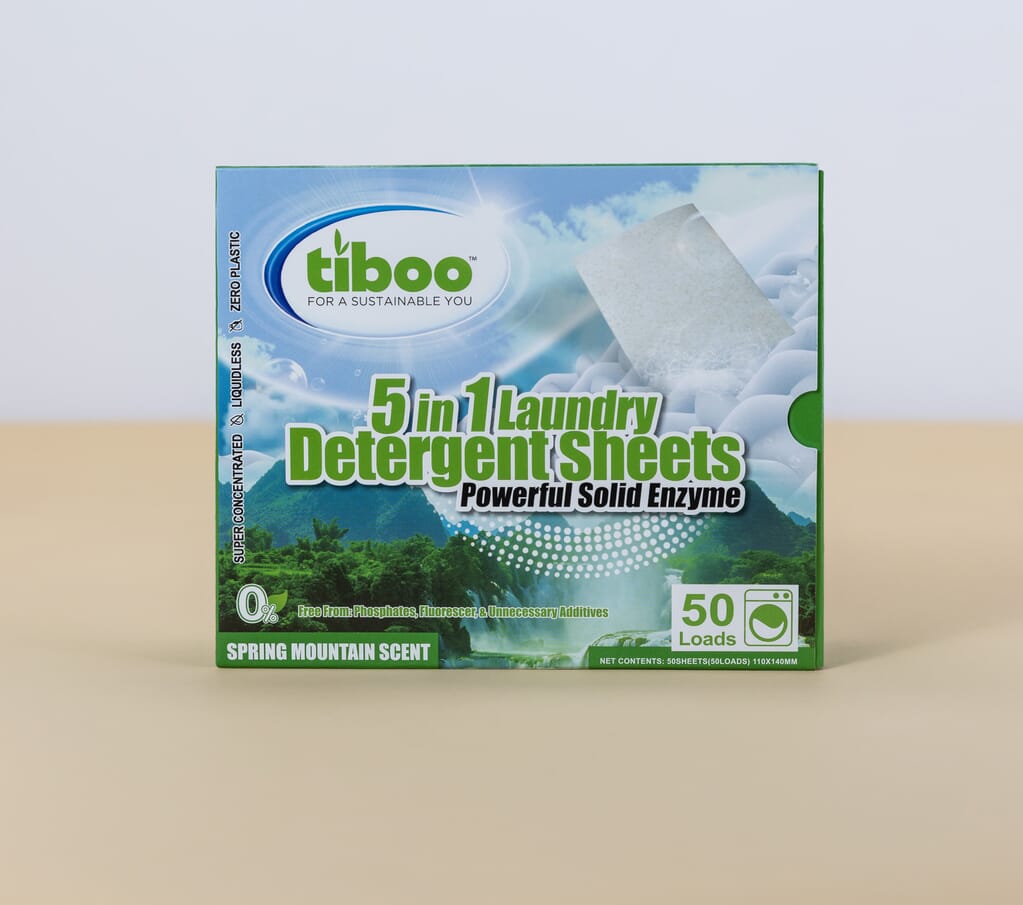
Tiboo’s laundry detergent sheets, for instance, are formulated without added synthetic fragrance, packaged in plastic-free cardboard, and designed to dissolve fully at lower wash temperatures – the kind of detail worth comparing across any brand you’re considering, not just this one.
For everyday loads and normal temperatures, yes – performance is broadly comparable. For heavily soiled items or large loads, liquid detergent or a pre-treatment step may still perform better.
Yes. Genuinely eco-formulated sheets clean effectively for regular washing, reduce plastic packaging waste, and cut shipping emissions thanks to their lightweight, water-free format – though quality varies by brand.
There’s very little to hold sheets back – the only small adjustments are pre-treating stubborn stains and using two sheets for bigger loads, both quick habits that most people pick up within their first wash or two. Choosing a brand with clear ingredient disclosure ensures you get the full environmental benefit.
Look for sheets that are fragrance-free, packaged without plastic, made with biodegradable ingredients, and manufactured close to where you live to minimise transport emissions. Comparing ingredient lists and packaging claims across brands is the most reliable way to judge this, rather than relying on marketing language alone.
Cost is broadly comparable per wash, though bulk packs of sheets can work out slightly cheaper than premium liquid detergents. The bigger saving is often in reduced storage space and fewer delivery emissions if you buy online.
Genuinely eco-formulated sheets are, largely thanks to lighter shipping weight and plastic-free packaging – but “eco-friendly” isn’t a regulated term, so it’s worth checking a brand’s ingredient list and packaging rather than the label alone. Liquid detergent can be reformulated to be more sustainable too, but sheets have a structural head start on packaging and transport emissions.
The dissolvable film most sheets are made from (commonly PVA) isn’t classed as a microplastic under UK regulations, though how fully it biodegrades varies by formulation. If this is a priority, look for brands that disclose their specific film ingredient rather than a vague “biodegradable” claim.
No – well-formulated sheets dissolve fully during a standard wash cycle and don’t leave residue, so they’re no harder on a machine than liquid or powder detergent. Issues are more likely if sheets are used well below their recommended wash temperature.
Look for sheets with a full ingredient disclosure, no added synthetic fragrance, and a clearly stated dissolvable film type. Brands that are transparent about formulation – Tiboo included – safer, more trustworthy choice compared with those relying on vague “natural” claims.
Eco friendly laundry sheets are a real win – a rare case where the more sustainable choice is also the more convenient one. The reduction in packaging waste and shipping weight is significant, dosing is effortless, and performance stands up well against liquid detergent across everyday washing.
For most households, switching to a well-formulated laundry sheet is an easy, positive change: less plastic, less clutter, less weight to ship and store, and clean clothes at the end of it. Choosing a brand with genuine ingredient transparency, like Tiboo, makes it an even easier decision.
"*" indicates required fields