In many cases, yes – and bulk-buying bamboo toilet paper can make sustainable toilet tissue genuinely affordable, not just a “nice to have” for people with money to spare.
But the real answer isn’t as simple as “more rolls = more savings.” The smart way to work it out is to stop looking at rolls altogether and start looking at how much tissue you’re actually getting for your money – the metres, the sheets, and the ply. That’s where bulk packs, and specifically longer double-length rolls, start to show their value.
Quick answer: Yes. Buying eco-friendly toilet paper in bulk can be cheaper long term because larger packs reduce the effective cost per roll and cut down on how often you need to reorder. Tiboo’s rolls are double-length at 30 metres each, so a 48-roll pack works out cheaper per metre of tissue than a smaller pack – and subscribing on top of that saves a further 10%.
Yes. Buying more toilet paper in one go generally lowers your effective cost per roll, and it comes with a few other financial perks that are easy to overlook.
The one thing worth flagging: bulk buying only pays off if you’re comparing the right numbers. That’s the next bit.
There’s a common assumption that bamboo toilet paper is a premium product you pay extra for as a treat. It doesn’t have to be. Bamboo isn’t inherently expensive to produce – it’s a fast-growing grass, not a slow-growing tree – and when it’s sold in efficient pack sizes, it can be genuinely competitive.
Here’s the catch: two products can both say “48 rolls” on the packaging and contain very different amounts of actual toilet tissue. A short, thin roll and a long, substantial roll can sit in identically sized boxes. So the roll count on its own doesn’t tell you much. What matters is the tissue behind it – the roll length, the sheet count, the sheet size, and the ply.
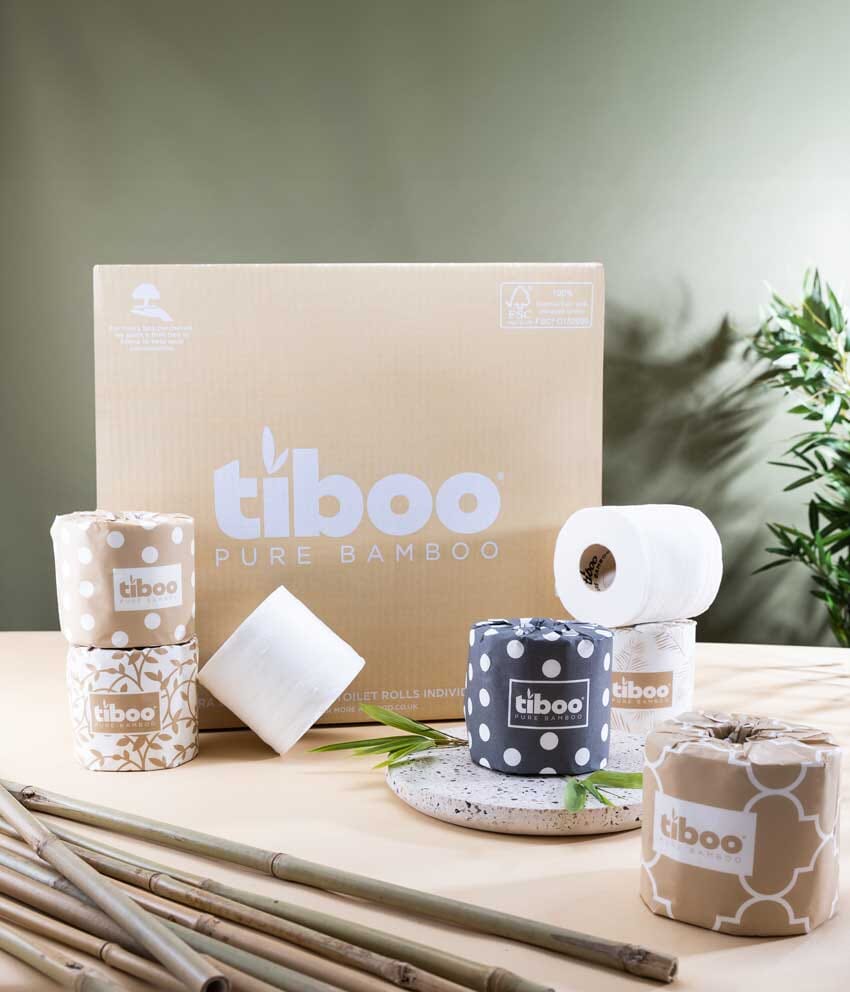
Tiboo’s 48-roll pack, for example, is made from 100% bamboo, comes in double-length 30-metre rolls, with 240 extra-large sheets per roll at 3-ply, and each sheet measures 10.5cm x 12.5cm. That’s a meaningfully bigger roll than a standard supermarket one, and it changes the maths on value quite a lot.
A roll count by itself is a blunt way to compare products. What actually determines value – and how long a pack lasts you – is the total length of tissue in the box.
A longer roll means:
Tiboo’s rolls run at 30 metres each – double the length of a standard roll – which means a “48-roll” pack is actually closer to what you’d expect from a much bigger box if you were comparing it to shorter, standard-length rolls. When you’re working out whether a bulk pack is worth it, roll length is arguably more important than roll count.
Looking at Tiboo’s 3-ply bamboo toilet paper range at the time of writing, the price-per-metre drops as the pack size increases:
| Pack size | Price | Total tissue (30m rolls) | Price per metre | Price per roll |
|---|---|---|---|---|
| 24 rolls | £25.00 | 720m | ~3.5p/m | ~£1.04/roll |
| 32 rolls | £29.99 | 960m | ~3.1p/m | ~94p/roll |
| 48 rolls | £42.00 | 1,440m | ~2.9p/m | ~88p/roll |
Buying the 48-roll pack instead of two 24-roll packs gets you the same amount of tissue for less money, simply because the larger pack is priced more efficiently per metre. That’s before subscription savings are even factored in.
Prices correct at the time of writing and may change – check the current Tiboo bamboo toilet paper range for today’s figures.
Tiboo’s Subscribe & Save option gives you 10% off, with deliveries available monthly or every 2, 3, or 4 months, depending on how much tissue your household gets through. On the 48-roll pack, that brings the price down from £42.00 to £37.80 per order – which works out at roughly 2.6p per metre, the cheapest way to buy it.
The appeal isn’t just the discount, though. It’s the convenience of never having to remember to reorder, combined with a recurring saving that compounds over the months and years you keep the subscription running. For a household that already knows it’ll be buying toilet paper indefinitely – which is every household – that’s a fairly easy way to shave a bit off a bill you were paying anyway.
It’s worth saying clearly: a subscription isn’t mandatory. You can buy any pack size as a one-off and switch to a subscription later if it suits you.
This depends entirely on your household. A useful starting point is the kind of guidance Tiboo’s own toilet roll calculator gives – for a single person, it suggests around 24 rolls will last roughly 18 weeks. Scale that up (roughly, not precisely) for more people in the house.
1-2 people: A smaller bulk pack, like the 24 or 32-roll option, is often plenty and easy to store.
3-4 people: A 48-roll pack starts to make more sense, both for value and for reducing how often you need to reorder.
Larger households: Bulk buying becomes particularly convenient – fewer supermarket top-ups, less risk of running out with a full house.
Also worth factoring in: guest bathrooms, multiple bathrooms, home offices, and children, all of which push consumption up faster than a simple headcount would suggest. If in doubt, look at how often you currently buy toilet paper and use that as your baseline rather than a generic average.
It can be, alongside the financial case. Buying in bulk tends to mean fewer individual orders, fewer delivery journeys, and less packaging relative to the total amount of tissue purchased, since one larger box replaces several smaller ones.
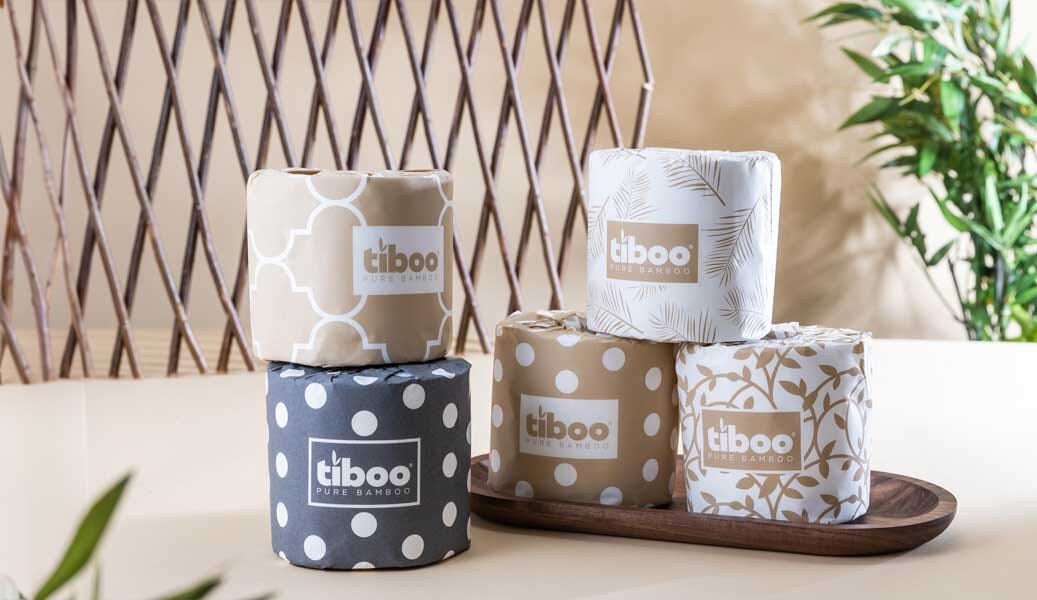
Tiboo’s rolls are individually wrapped in recycled kraft paper rather than plastic, and delivered in recyclable cardboard cartons, with free carbon-neutral UK shipping on every order. With every box purchased, Tiboo also plants a fruit tree in Malawi through its partnership with Ripple Africa.
Bulk buying isn’t a magic fix for environmental impact on its own – it won’t automatically reduce your footprint to zero, and the biggest factor is still the material the tissue is made from. But pairing a lower-waste bamboo product with fewer, larger orders is a sensible combination rather than a contradiction.
If you want to properly compare toilet paper – Tiboo or otherwise – two simple formulas do most of the work:
Price ÷ total metres of tissue = price per metre. This is the most reliable way to compare brands with different roll lengths, since it strips out the “how many rolls” distraction entirely.
Price ÷ total number of sheets = price per sheet. Useful when comparing packs with different sheet sizes or ply.
What you should be wary of is comparing purely on price ÷ number of rolls, since that number means very little if the rolls themselves are different lengths. A cheap-looking 48-roll pack of short, thin rolls can easily work out more expensive per metre than a pricier 48-roll pack of long, substantial ones.
Buying in bulk isn’t about trading down to a cheaper, thinner product just to save money. With Tiboo, the 48-roll pack is the same 3-ply, 30-metre, extra-large-sheet bamboo tissue as the smaller packs – you’re simply buying more of it, at a better rate.
The specification stays consistent across pack sizes: 100% bamboo fibre, naturally hypoallergenic, free from harsh chemicals (PFA-free), plastic-free packaging, and sourced from well-managed forests. Bulk buying here means getting better value from a product you were already choosing to use – not settling for less.
This varies a lot by household, so treat any figure as a rough guide rather than a promise. Tiboo’s own calculator suggests a single person might get through around 24 rolls in roughly 18 weeks. A couple, a family of four, or a home with regular guests will all use tissue at different rates, and multiple bathrooms will naturally increase consumption.
The most reliable way to estimate order frequency is to look at how often you currently buy toilet paper and use that as your benchmark, rather than relying on a generic per-person average.
Yes. In 2026, choosing eco-friendly doesn’t have to mean paying a premium. With the right pack size, genuinely long rolls, free delivery, and a subscription discount stacked on top, sustainable toilet paper can hold its own against conventional options on price – not just on principle.
Yes. Buying in bulk is one of the simplest ways to bring the cost of eco-friendly toilet paper down over time, provided you’re comparing packs properly – by metres and sheets, not just roll count.
More tissue, larger packs, fewer deliveries, and subscription savings add up to better long-term value. Want to see exactly what today’s Tiboo bulk packs cost? Visit the current Tiboo bamboo toilet paper range to compare pack sizes, roll lengths, and available savings for yourself.
Yes. Larger packs tend to have a lower effective cost per roll and per metre than smaller ones, and buying less often also saves on the hassle and risk of last-minute, overpriced purchases.
Yes, in most cases. Bamboo toilet paper follows the same pattern as other tissue products – bigger packs typically bring the price per roll and per metre down, especially when combined with a subscription discount.
It depends on the brand and pack sizes being compared, but looking at Tiboo’s current range, moving from a 24-roll pack to a 48-roll pack lowers the price per metre by roughly 15-20%, with a further 10% available through Subscribe & Save.
Usually, provided you check total tissue amount (metres and sheets) rather than just comparing roll counts, since roll length varies significantly between brands.
Yes. Tiboo sells 3-ply bamboo toilet paper in pack sizes including 24, 32, and 48 double-length rolls, with larger case options also available for households and businesses.
Yes. Tiboo’s Subscribe & Save option gives 10% off recurring orders, with flexible delivery frequency from monthly up to every four months.
This depends on household size. As a rough guide, Tiboo’s toilet roll calculator suggests a single person might use around 24 rolls over 18 weeks – larger households should scale up from there based on their own usage.
Divide the total price by the total metres of tissue in the pack (or the total number of sheets) rather than comparing prices per roll, since roll length and sheet size vary between brands.
Yes, particularly when bought in an efficiently priced bulk pack. Bamboo isn’t inherently more expensive to produce than tree-based paper, and pack size has a bigger effect on price than the material itself.
When comparing on price per metre rather than price per roll, the gap between eco-friendly and conventional toilet paper is often smaller than it first appears – and bulk buying narrows it further.
"*" indicates required fields