What Does "Plastic-Free Toilet Paper" Actually Mean?
Toilet paper doesn't get much thought until you're standing in front of a shelf full of "eco," "sustainable," and "plastic-free" labels, trying to work out which ones actually mean something. So let's clear it up - starting with what plastic-free bamboo toilet paper really involves, and why we make ours the way we do.

The Problem With Conventional Toilet Paper
Most toilet paper is made from tree pulp, using a lot of water and chemicals along the way for bleaching and processing, and it's often wrapped in plastic film at the end. That's simply how the majority of toilet paper has been made for decades - and it's exactly what we set out to do differently.
Why We Chose Bamboo
Bamboo is a grass, not a tree, and it grows at a pace that puts most forestry to shame - over 35 inches a day, regrowing fully within two years. Compare that to the years or decades a forest takes to mature, and the case for switching raw materials makes itself. A bamboo grove can be harvested again and again from the same root system, with nothing to replant each cycle.
It's not just fast-growing, either. Bamboo:
- Produces 30% more oxygen than trees
- Needs fewer chemicals and less water to process
- Grows without pesticides
Our bamboo is also Panda-Safe - responsibly sourced, and never taken from panda habitat, since bamboo is a primary food source for wild pandas too.
Plastic-Free, Properly
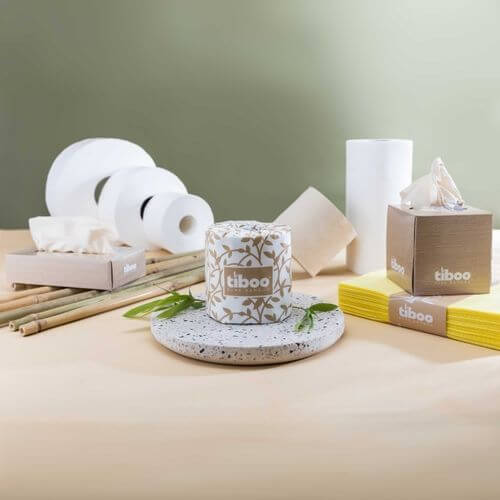
This is where "plastic-free" needs to earn its place on the label, rather than just sit on it. Our toilet rolls are plastic-free products with a 100% biodegradable design, free from microplastics, and made without single-use plastic - the packaging and the paper itself, not one or the other.
What Happens After You Flush
Being plastic-free doesn't mean much if a product still causes problems once it's used. Our bamboo toilet paper is:
- Flushable - breaks down quickly and works with standard sewer systems
- Septic-tank safe - breaks down easily enough not to strain a septic system
- Hypoallergenic, anti-bacterial, and anti-fungal - gentle even on sensitive skin
- Vegan-friendly
Beyond the Bathroom
Every order does more than land on your doorstep. We plant a fruit tree with every order, through our partnership with Ripple Africa in Malawi - a programme that's helped plant over 1.75 million trees and protect more than 68 million square metres of rainforest so far.
A Quick Gut-Check for Any "Plastic-Free" Claim
Next time you see the label - ours or anyone else's - it's worth asking:
- Is the packaging actually plastic-free?
- Is the paper itself free of microplastic fibres or synthetic coatings?
- What's the source material - fast-regenerating like bamboo, or standard wood pulp?
- Is it verified flushable and biodegradable?
- Does the brand back it up with something bigger than the product itself?
For us, the answer to all five is yes - and that's the whole point of doing it this way.
FAQs: Bamboo Toilet Paper
Is bamboo toilet paper flushable?
Yes. Our bamboo toilet paper breaks down quickly in water and works with standard sewer and septic systems.
Can bamboo toilet paper be used with a septic tank?
Yes. It's septic-safe, breaking down easily enough to avoid putting extra strain on a septic system.
Does bamboo toilet paper actually biodegrade?
Yes - our rolls have a 100% biodegradable design, built to disintegrate rather than persist like some conventional products.
How is bamboo toilet paper made?
We harvest bamboo, convert it into pulp, and process it into paper - a process that's more sustainable than conventional tree-pulp paper production.
Is bamboo toilet paper better than recycled toilet paper?
Both are eco-conscious choices. Bamboo has the edge because of how quickly it regrows, compared to the sourcing involved in recycled paper.
Can bamboo toilet paper cause skin irritation?
Our bamboo toilet paper is hypoallergenic, with anti-bacterial and anti-fungal properties, making it a gentler option for sensitive skin.
Is bamboo toilet paper genuinely better for the environment than standard toilet paper?
Faster-growing source material, no pesticides, lower water and chemical use in processing, plastic-free packaging, and a tree planted with every order - together, that's what makes bamboo the more sustainable choice.
Does ordering from Tiboo have any wider environmental impact?
Yes. Every order plants a fruit tree through our partnership with Ripple Africa in Malawi - a programme that's helped plant over 1.75 million trees and protect more than 68 million square metres of rainforest.